
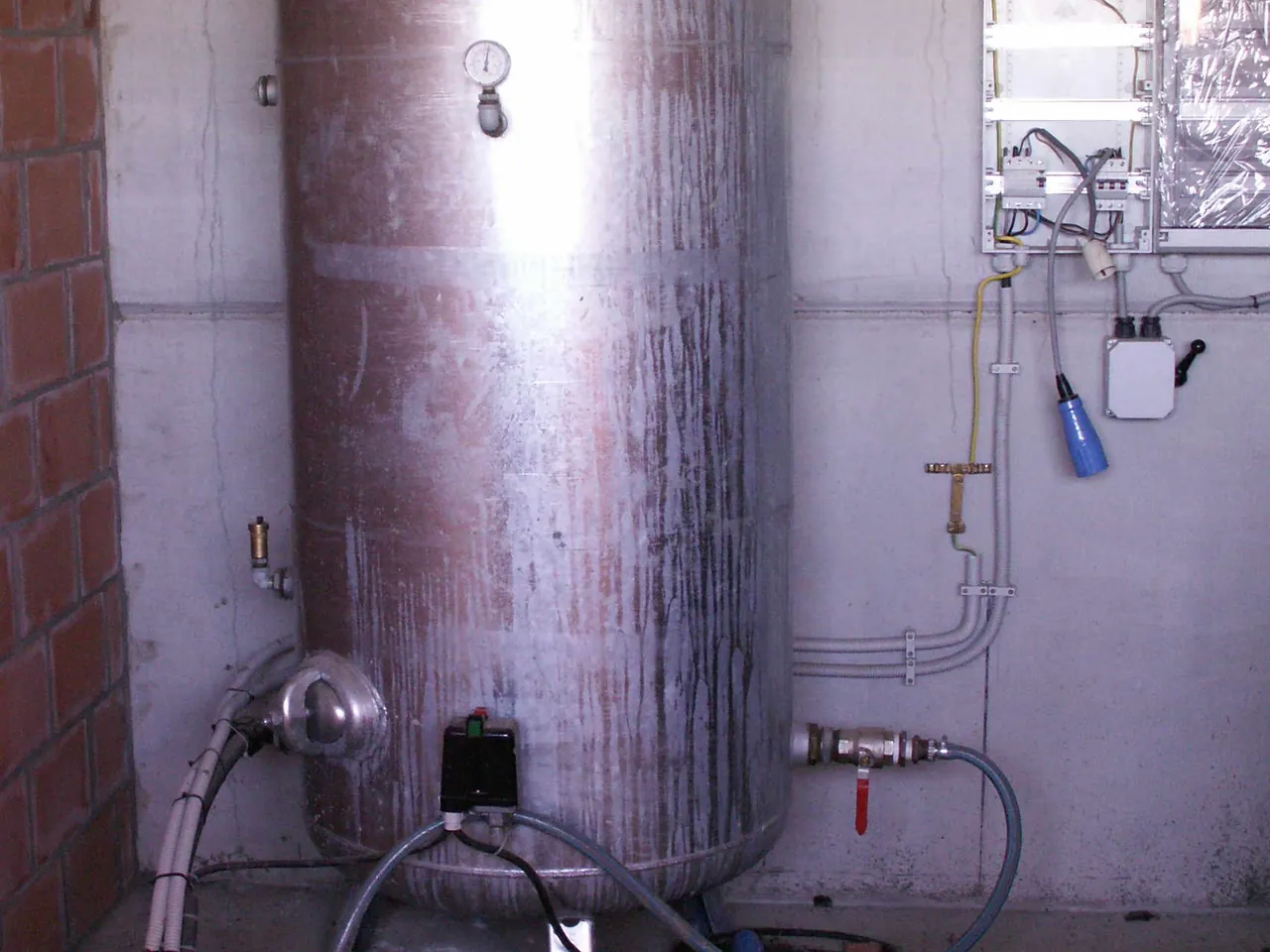
Well pressure tank replacement cost in New Jersey: prices by tank size, labor and when to replace
Most well pressure tank replacements cost $800 to $1,500 installed, per the national cost guide HomeGuide. HomeGuide’s national average is $1,000. Its range runs from a $450 minimum to $3,000 or more. Angi puts the national average lower, at $500, with most homeowners spending $300 to $700.
The two guides price different jobs. HomeGuide’s figure includes the tank and full professional labor, which it puts at $250 to $500 or more. Angi’s labor line is $125 to $200 for a straightforward swap. Tank size moves both totals, and so does how hard the tank is to reach.
These are published national figures. Your tank size and setup decide the real number. Our well pump and pressure tank service sizes the new tank to your household, and estimates are free.
Well pressure tank replacement cost by tank size
HomeGuide calls tank size the biggest factor in the replacement cost. Every figure in this table comes from its 2026 guide. Installed means the tank plus professional labor.
| Tank size | Tank only | Installed |
|---|---|---|
| 20 to 29 gallons | $200 to $500 | $450 to $1,000 |
| 30 to 39 gallons | $300 to $850 | $550 to $1,350 |
| 40 to 59 gallons | $350 to $1,100 | $600 to $1,600 |
| 60 to 79 gallons | $500 to $1,300 | $750 to $1,800 |
| 80 to 99 gallons | $600 to $1,800 | $850 to $2,300 |
| 100 to 119 gallons | $850 to $2,000 | $1,100 to $2,500 |
| 120 to 139 gallons | $900 to $2,500+ | $1,150 to $3,000+ |
For a household of one to four people, HomeGuide’s sizing guide lands between 20 and 60 gallons. Its 20 to 59 gallon rows run $450 to $1,600 installed. Angi prices tank capacity at about $10 to $15 per gallon. Your household sets the row, and our estimates are free.
What does each type of pressure tank cost?
Angi breaks the tank price down by type. Most tanks use two compartments to keep the water and the compressed air apart. Angi recommends two-compartment models for better pressure control.
| Tank type | How it holds the air | Angi average cost |
|---|---|---|
| Diaphragm | A membrane welded shut | $200 to $2,500 |
| Bladder | A bladder held in with screws | $150 to $1,500 |
| One-compartment | Water and air share one chamber | $100 to $300 |
The wide ranges come from size and build. A diaphragm tank costs $200 to $500, per Angi. A 120-gallon model, or a move from vinyl to all-metal construction, can reach $2,500.
Bladder tanks average $150 to $400 and reach $1,500 in larger sizes. Angi rates them a slight step down from diaphragm tanks.
One-compartment tanks cost the least, but Angi says the shared chamber raises the risk of waterlogging. HomeGuide lists the same design as an air-over-water tank, with water sitting right on the compressed air. It needs more upkeep, because the air slowly dissolves into the water. Our estimates are free.
What does labor cost, and what else gets replaced?
HomeGuide puts the labor to replace a well pressure tank at $250 to $500 or more. Costs rise when the job means rerouting pipes or replacing other parts. Angi’s $125 to $200 labor figure can run higher when a tank sits in a hard-to-reach spot.
Where the tank sits matters. HomeGuide says tanks in basements or utility rooms cost less to replace than those in cramped crawl spaces. A buried tank that needs digging costs more than one above ground.
Parts around the tank can change in the same visit. HomeGuide says costs go up when the pressure gauge, pressure switch or well pump also needs replacing.
We set the new tank’s air charge two pounds below the cut-in pressure, then match the pressure switch to it. The Washington State Department of Health lists 30 to 50 and 40 to 60 psi as common switch ranges. HomeGuide also suggests asking whether an estimate includes disposal of the old tank. Our estimates are free.
Signs your well pressure tank needs replacing
A failing tank shows up in how the pump runs. When the bladder inside fails, water fills the air space and the tank is waterlogged. The Washington State Department of Health says waterlogged tanks should be replaced. Watch and listen for these signs:
- The pump clicks on and off rapidly, even with little water running.
- Pressure swings at the tap while water runs.
- Tapping the tank gives a solid sound instead of a hollow one, per HomeGuide.
- The tank feels heavy when you gently tip it, a sign the Washington guide names.
- Water comes out of the air valve when you press its center pin.
- Rust or corrosion shows on the outside of the tank.
HomeGuide says outside rust points to damage inside the tank. If weak pressure is the main complaint, read the causes of low well water pressure, in order. If the pump itself is acting up, see our guide to a well pump that is not working.
What size pressure tank does your house need?
HomeGuide’s guideline starts with the household. One or two people with low water use may get by with 20 to 40 gallons. Families of three or four do well with 40 to 60 gallons. Larger families or high-demand homes may need 80 gallons or more.
We size tanks by drawdown, the water you actually get between pump starts. A bigger tank means fewer starts and a longer pump life. A healthy pump starts 6 to 8 times an hour.
HomeGuide adds that pump capacity and water use also set the right size. South Jersey wells move both numbers. Deep Cape May County wells reach confined sands to stay clear of salt water. Those depths need a submersible pump with real lift.
A house with three bathrooms and a sprinkler zone needs more pipe and more tank. A tank sized for one bathroom short cycles once you add a second. We handle those water system upgrades for added bathrooms or irrigation, with the tank sized to the new demand.
How long does a well pressure tank last in South Jersey?
Plan on roughly 5 to 15 years, depending on the tank. The Washington State Department of Health says the average bladder tank lasts 5 to 7 years. HomeGuide puts the average at 10 to 15 years. It says water quality and maintenance change that number.
Water quality is the local factor. Most mainland wells here draw from the Kirkwood-Cohansey sands. The U.S. Geological Survey says that water is typically acidic and soft, and it rates the water highly corrosive. That water eats copper, and in the field it is hard on fittings.
Air care matters too. Air slowly escapes from a bladder tank, the same way it leaks from a bike tire. Low air over-stretches the bladder and leads to early failure, per the Washington guide. HomeGuide says checking the air pressure and looking for leaks can extend a tank’s life.
What if the pump needs replacing too?
Sometimes the pump is the bigger bill. HomeGuide puts a well pump replacement at $1,000 to $2,500 or more. Our well pump repair and replacement cost guide breaks that number down by pump type and part.
The two wear on each other. Per the Washington guide, lost tank air leads to excessive pump cycling. That may shorten the life of the pump motor.
When we replace a pump, we test the tank on the same visit. Doing both at once saves a second trip and labor charge.
If the pump has already quit, our 24/7 well pump repair service starts with diagnosis. Call (856) 207-7373 for a free estimate anywhere in Gloucester, Cumberland, Salem, Atlantic, Camden or Cape May County.